Loading...
Serving Danville, CA and surrounding areas. (925) 725-7095
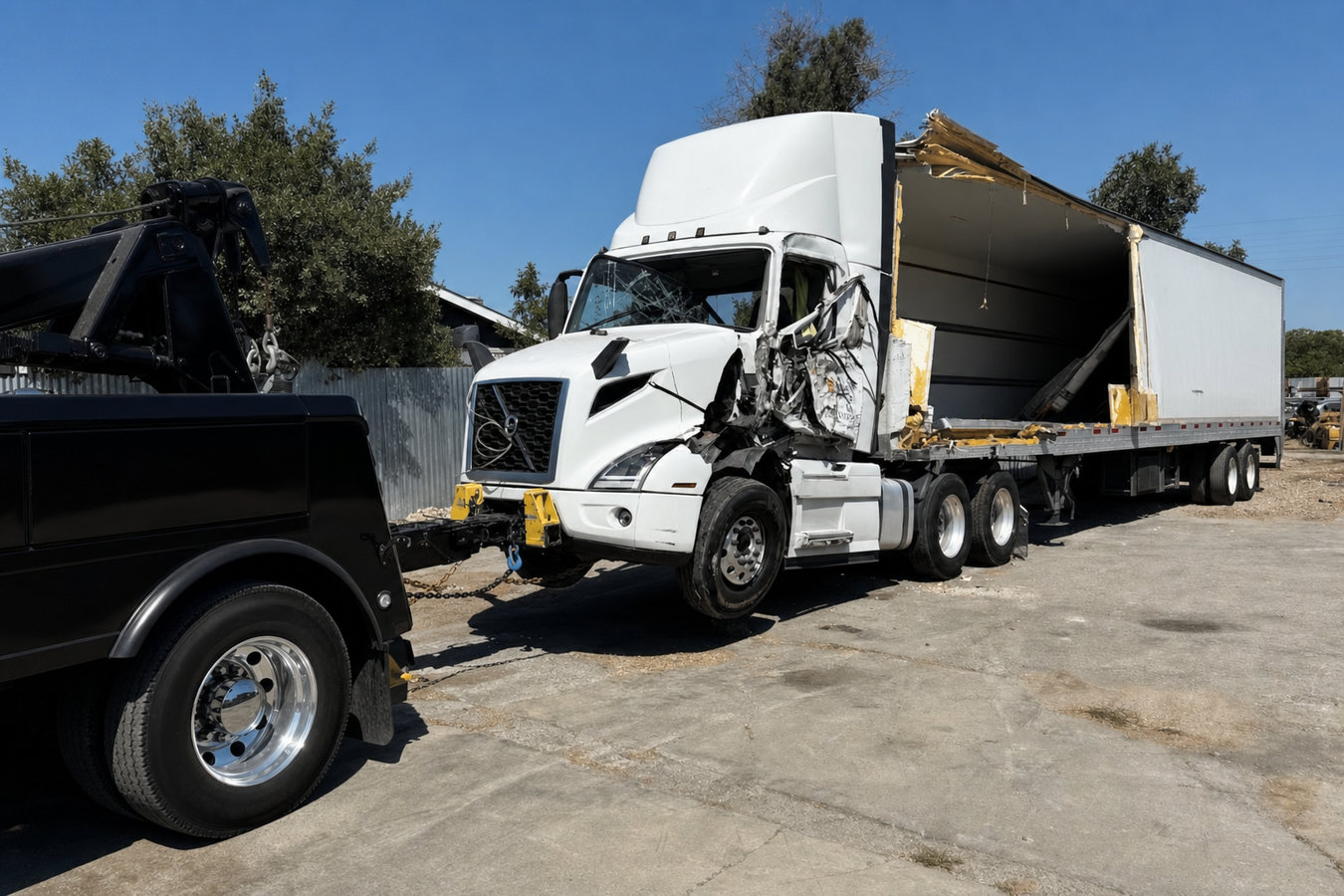
After a crash on I-680 or a local hill road, you need a recovery crew that assesses before they hook up - getting your vehicle to your shop without adding damage.
Accident recovery in Danville, CA is more than towing a damaged car away from a crash scene - it means safely securing a vehicle that may be disabled, leaking fluids, or resting in an unstable position, then moving it without causing additional damage. Most straightforward pickups from a highway shoulder can be completed in under an hour from your call to the vehicle being loaded.
The I-680 corridor through Danville is one of the busiest commuter highways in the East Bay. Rear-end collisions, sideswipes, and spin-outs are a primary driver of recovery calls here, and during morning and evening commute windows a disabled vehicle creates rapid backups. A trained recovery crew does not just show up and hook up - they walk the vehicle first, check for fluid leaks and instability, and choose the right attachment method before anything moves. That careful first step protects you, other drivers, and the vehicle itself.
If your situation involves a commercial vehicle or equipment, our wrecker service handles larger loads requiring an upright tow. For around-the-clock dispatch when every minute on the roadside counts, our emergency towing team is available any time.
If your car will not start, a wheel is bent, the steering feels wrong, or you see fluid leaking underneath, do not try to drive it. Even if damage looks minor on the outside, something structural may have shifted. Call for recovery and let a professional assess whether it is safe to move and how.
A disabled vehicle in a travel lane on a high-speed corridor like I-680 through Danville is a serious hazard. If you cannot safely coast to the shoulder, stay in your car with your seatbelt on, turn on hazard lights, and call for help immediately. Getting a recovery truck on the way fast reduces the risk of a secondary collision.
Roads like Diablo Road and Blackhawk Road have sections where a vehicle can slide off the pavement and rest on a slope or in a drainage ditch. Standard towing equipment cannot safely reach or move a vehicle in this position - a winch and rigging are needed. This is exactly when calling a recovery specialist makes a real difference.
Insurance adjusters often need a vehicle at a preferred repair facility or inspection yard before they can process a claim. If your car is still at the scene or sitting at a tow yard, a recovery company can transport it wherever your insurer directs. Having a provider you can call directly speeds up the process.
Our accident recovery operation covers the full range of post-collision situations in the Danville area. For vehicles on the I-680 shoulder in a stable position, a flatbed is often the safest choice - all four wheels are lifted off the ground, reducing the risk of further damage to the drivetrain or suspension. For vehicles off the road on a hillside or in a ditch, our team uses winch and rigging equipment to bring the vehicle back to a stable, accessible position before loading. If you have been involved in a serious collision and need a team that can handle complex scene work, our wrecker service includes purpose-built trucks for upright towing from crash scenes.
We work with drivers, fleet managers, and insurance coordinators to get vehicles where they need to go after an accident. That means your preferred repair shop, a dealership, or a storage facility while you sort out your claim. We provide itemized receipts and vehicle-condition documentation that your insurer will ask for. For situations that require ongoing towing after the initial recovery - say, moving the vehicle from a storage yard to a repair shop days later - our emergency towing team handles those follow-on transport jobs as well.
Drivers on I-680 whose vehicle is damaged but stable and needs transport to a shop or dealership.
Vehicles that have left the pavement on Diablo Road, Blackhawk Road, or other hillside routes around Danville.
Fleet managers whose commercial delivery truck or work vehicle was in a collision and needs to be moved promptly.
Vehicle owners whose insurer needs the car delivered to a specific inspection yard or preferred repair facility.
Danville sits at the foot of the Mount Diablo foothills, and many of the residential and canyon roads here - including Diablo Road and Blackhawk Road - involve curves, grades, and limited shoulder space. A vehicle that leaves the roadway on one of these routes may end up in a ditch, against a hillside, or in a position that requires winching rather than a simple hookup. This kind of recovery takes more time and specialized rigging than a flat-highway tow. Drivers in Blackhawk and the surrounding hill neighborhoods know firsthand how quickly a sharp curve can put a car in a bad spot.
The region also experiences dense tule fog in late fall and wet, slick roads during the rainy season from late fall through early spring. These conditions increase the frequency of multi-vehicle accidents and spin-outs on I-680 and connecting routes, and a recovery crew working in wet or foggy conditions must set up traffic control and work more carefully, which extends the time on scene. For drivers coming from Pleasanton and heading north on I-680, wet-weather incidents near the Danville exits are a regular occurrence. The California Highway Patrol provides guidance on what to do after a highway collision at chp.ca.gov, including information on your rights when a tow is directed by an officer.
Dispatch asks for your exact location, a description of your vehicle, and what happened. Be ready to say whether the vehicle is in a lane, on the shoulder, or off the road, and whether anyone is injured. The more clearly you describe the situation, the faster the right equipment is sent to you.
When the crew arrives, they check for fluid leaks, how the vehicle is resting, whether it is stable, and whether any part is pinned or under tension. This assessment takes a few minutes but determines the safest way to hook up without causing additional damage.
The crew chooses the right method - flatbed loading, wheel-lift, or winching if the vehicle is off the road. They use straps, chains, or a combination attached to proper recovery points. If winching is needed first, that happens before loading, and the crew works steadily to keep the vehicle stable.
Once loaded and strapped down, the operator confirms where the vehicle is going - your preferred shop, a dealership, or a storage yard. At drop-off, you receive paperwork documenting the vehicle's condition. Keep that paperwork, as your insurer and repair shop will both ask for it.
We respond to all inquiries within 1 business day. For accidents on I-680 or an active crash scene, call us directly at (925) 725-7095.
We respond within 1 business day for planned transport and faster for active crash scenes. No obligation to call and ask what we can do. After you submit, someone from our office calls you directly to confirm details and get your vehicle moving to the right place.
(925) 725-7095When your car is sitting on the shoulder of I-680 near Danville during the evening commute, every minute feels long and every passing car feels close. A dispatcher who knows this corridor routes the nearest available truck quickly and keeps you updated so you know help is coming.
A collision already put stress on your car - the recovery should not add to it. The crew takes time to assess your vehicle's position before hooking up, uses the right equipment for the damage and the terrain, and loads it in a way that protects what is left. Whether your car is on the highway shoulder or down a slope off Diablo Road, it gets moved carefully.
Cost is one of the first things people worry about after an accident. You get a clear explanation of charges before work begins and an itemized receipt at the end. Towing rates in California are often subject to local caps, and a reputable company charges within those bounds and shows you exactly what you are paying for.
After an accident, you need your vehicle where it can be assessed and repaired, not sitting somewhere you did not choose. We take your car exactly where you direct - your preferred shop, a dealership, or wherever your insurer needs it - and give you the paperwork to move your claim forward without delay.
After an accident, the details matter - where your vehicle ends up, what paperwork you leave with, and whether the recovery itself added any damage. We handle all of it, and we do it on roads we know well.
Purpose-built wrecker trucks for situations requiring an upright tow, including post-accident clearance on open highway lanes.
Learn MoreAround-the-clock towing dispatch for breakdowns and collisions when every minute on the side of the road matters.
Learn MoreEvery minute a vehicle sits exposed on I-680 or a Danville hill road is a risk - call now and we dispatch a recovery crew with the right equipment for your situation.